

What an insect droppings identifier can do
People often find small specks, smears, or pellets around a home and want to know whether they are insect droppings and, if so, what insect may have left them. BugShot can look at a photo of those droppings and return a likely source, with a confidence level. When the app is not sure, it may list more than one likely source so you can compare them.
Insect droppings — sometimes called frass by biologists and gardeners — vary a lot. They can look like pepper, coffee grounds, fine powder, smears, or tiny pellets, depending on the insect and what it has been eating. Other things in a house can look similar, including dirt, spices, wood dust, and droppings from other animals. A photo identifier can narrow the possibilities. It cannot always tell you the exact insect, and it cannot inspect a hidden area of the building for you.
The result is a likely identification, not a guarantee. That wording is especially important here, because droppings from different insects can resemble each other, and non-insect debris is easy to mix up with insect droppings in a casual photo.
How to photograph insect droppings
A useful droppings photo is close, sharp, and honestly lit. The goal is to show the size, shape, color, and texture of the material, plus a little of the surface it is sitting on.
Take a close-up and a context shot
First, get as close as you can while keeping the specks or pellets in focus. The difference between fine powder, pepper-like specks, smears, and formed pellets is often the most useful clue, and it disappears in a wide, distant shot. Then take a second picture a little farther back, showing where you found the material: a windowsill, a cabinet hinge, a baseboard, a shelf, or a corner of a garage. If you also see an insect in the same area, photograph the insect too. A picture of the animal, when you have it, can be more informative than droppings alone.
Lighting and scale
Use even light so the droppings are not lost in shadow or washed out by flash. Side light can reveal texture: whether the material is powdery, shiny, ridged, or smeared. Include a coin, a ruler, or another small object for scale if you can do so without disturbing the area too much. Size is one of the main ways to tell insect droppings from larger animal droppings or from ordinary dirt.
Try not to smear the material with your finger or a cloth before you photograph it. If you need to move an object to see what is behind it, do that gently. If you uncover a large hidden deposit or a space you do not want to disturb, step back and consider professional inspection rather than digging further.
What insect droppings can look like around a home
There is no single appearance that covers all insect droppings. The notes below describe general patterns people often photograph in U.S. homes. They are starting points for comparison, not a complete key, and similar material can have more than one cause.
Pepper-like specks and smears
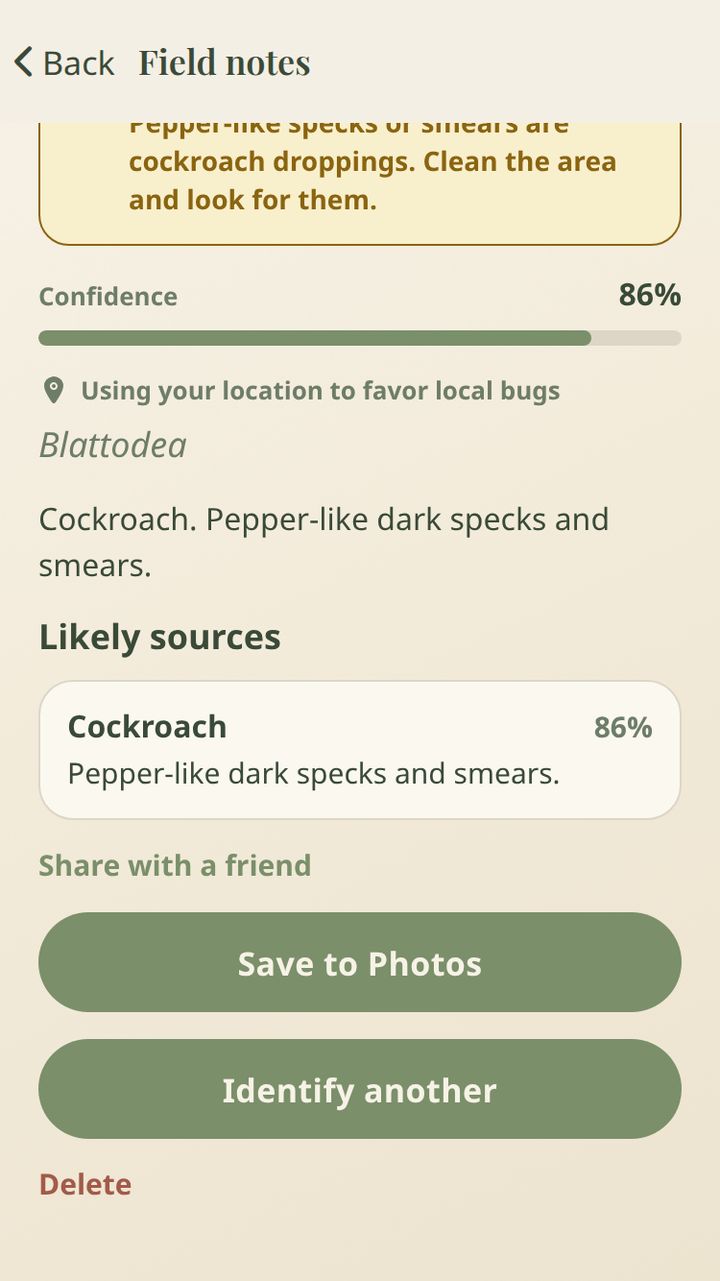
Small dark specks, sometimes with dark smears on a surface, are a pattern people often associate with cockroaches, especially in kitchens, bathrooms, and other rooms where food or moisture is present. The specks may look like ground pepper. Smears can appear on vertical surfaces. Other insects, and some non-insect debris, can look similar in a poor photo, so a close, well-lit picture of both the specks and the surface matters.
Pellets and loose piles
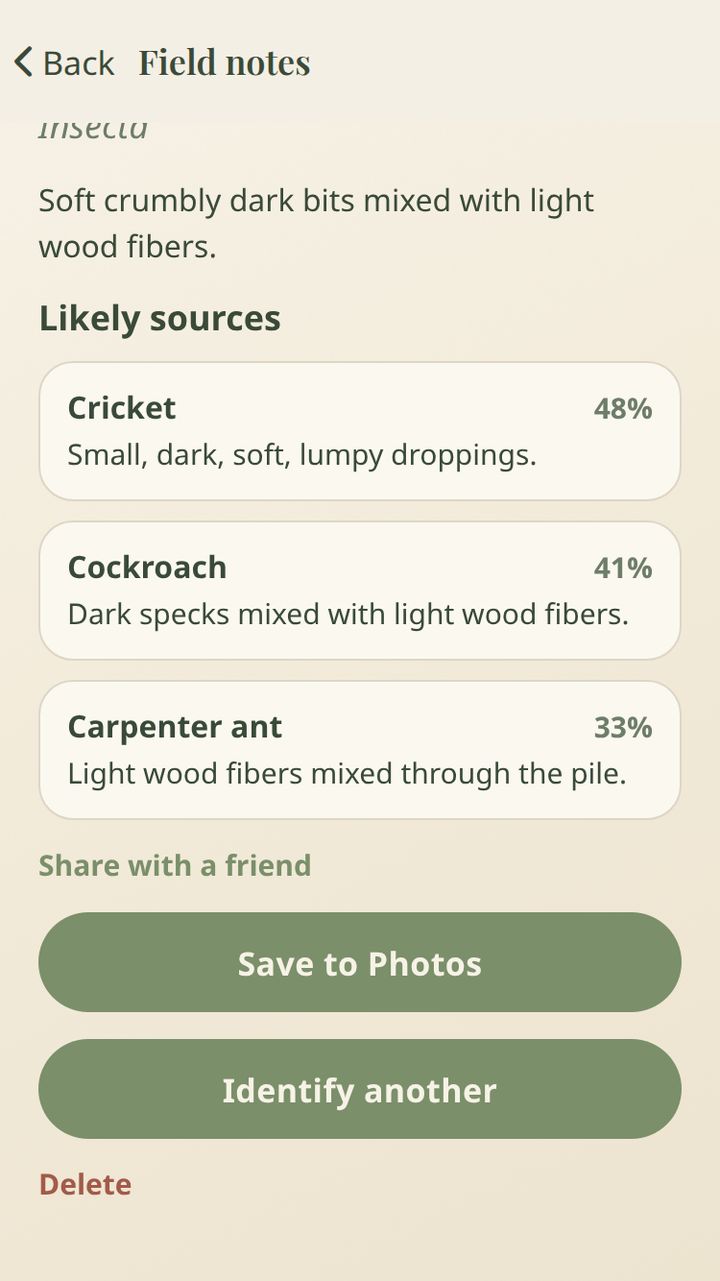
Some insects leave small, formed pellets, sometimes in a loose pile. Texture, uniformity, and what is mixed into the pile — for example, bits of plant material or wood fibers — can point toward different sources. When a photo does not show a distinctive shape, BugShot may return more than one likely source with lower individual confidence, which is an honest outcome, not a failed one.
Fine dust, crumbs, or material under shelves and furniture
Fine, crumbly material or tiny fragments under a shelf, in a pantry, or along a baseboard can be insect droppings, leftover food, or other debris. Pantry insects and some fabric- or pantry-associated beetles are among the reasons people photograph this kind of material. A context photo of nearby packages, wool, or fabric can help you interpret the result, and a photo of any insect found in the same spot is even more useful.
Things that are not insect droppings, but look similar
Dirt, sand, coffee grounds, ground spices, pencil shavings, and ordinary household dust can all mimic insect droppings in a quick photo. Droppings from mice or other vertebrates are usually larger than most insect droppings and differ in shape, but size is easy to misjudge without a scale object in the frame. If a result seems off, look again at the size and texture, add a scale photo, and consider other explanations before you treat the material as a particular insect’s droppings.
Wood dust or powder around furniture or structural wood can have several causes, including some wood-boring insects and ordinary woodworking or wear. A photo of the material, the surface, and any holes or insects nearby is more useful than the dust alone. If you are worried about damage to the building, a licensed professional can inspect the site in person. A likely source from a photo does not confirm the extent of a problem inside a wall or piece of furniture.
How BugShot shows likely sources and confidence
For insect droppings, BugShot may name a most likely source when confidence is relatively high, or it may list a few likely sources when several explanations fit the photo. You might see a confidence figure next to each candidate. That format is meant to reflect uncertainty instead of forcing a single name onto an ambiguous picture.
“Likely” means the app’s best estimate from the photo, not a laboratory analysis and not proof of a particular infestation. Droppings from different insects can look alike. Lighting, moisture, and the surface can change how the material appears. If the candidates do not seem to match what you see, take another photo — closer, with a scale object, or including an insect found nearby — and compare the descriptions rather than stopping at the first name.
Optional location can favor insects found in your region, but it does not identify droppings by itself, and it is never required. You can leave location off and still run an identification.
When to call a professional, and when to leave the area alone
An isolated few specks on a windowsill may be something you simply clean after you have the photo you want. Larger amounts of droppings, repeated deposits in the same place, droppings in a pantry or near a bed, or material accompanied by many insects are reasons to take the situation more seriously. A licensed pest professional can inspect the property, look in places a phone camera cannot, and discuss next steps. BugShot cannot do that work from a picture.
If you have allergy concerns, asthma, or a reason to avoid stirring up dust, be careful about sweeping or vacuuming large deposits before you know more. If a child or pet has eaten or had contact with unidentified droppings and you are worried, contact a doctor, veterinarian, or Poison Control (1-800-222-1222 in the United States) rather than relying on an app result.
BugShot is not a medical device and is not a substitute for an on-site inspection. Use a likely identification as information, then decide whether cleaning, monitoring, or professional help is the reasonable next step.
Privacy and pricing
BugShot is made by United Ora Inc. The insect droppings identifier is part of the same free app that identifies insects and spiders. You get free identifications every day, with no account and no ads. BugShot Pro is an optional subscription for up to 400 identifications a week, billed through the App Store or Google Play. You can share a download link at unitedora.com/get.
Photos are sent over HTTPS for identification. Location is optional and not stored. History remains on your device until you clear it. See the BugShot Privacy Policy for the full description of how photos are handled and how to request deletion of records.